


If you are missing one or more teeth, you are well aware of the impact on your appearance, chewing function, and overall dental health. Your teeth work together for many daily functions, from eating to speaking. With missing teeth, it can be quite challenging to perform these otherwise normal daily activities. Beyond all of that, missing teeth should be replaced to maintain the integrity of your gums and jawbone.
Fixed dental bridges are a simple yet highly effective way to replace missing teeth and restore your smile.
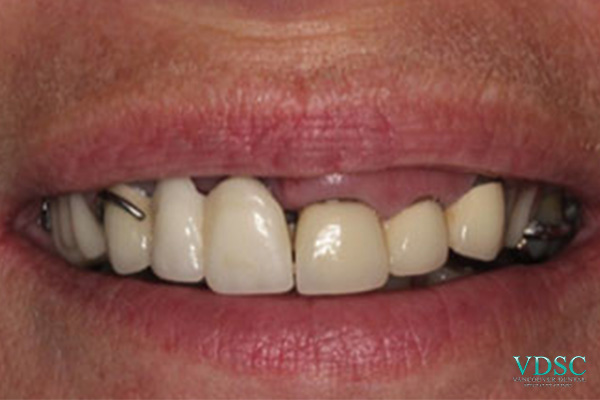
Before treatment
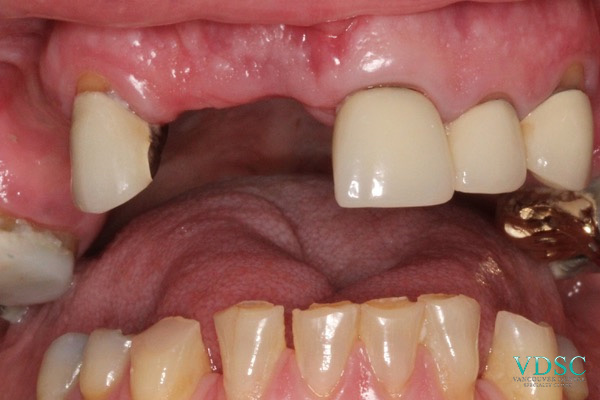
Before treatment
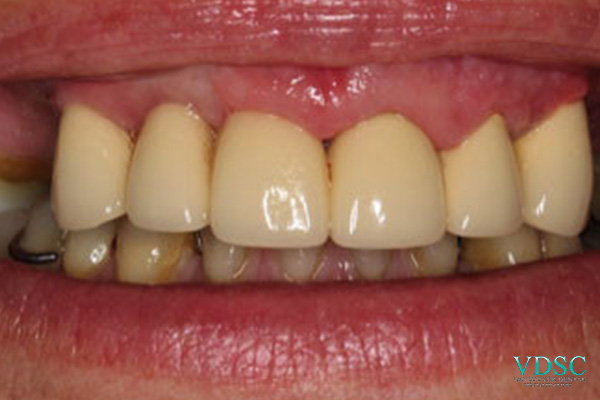
After treatment with dental bridge
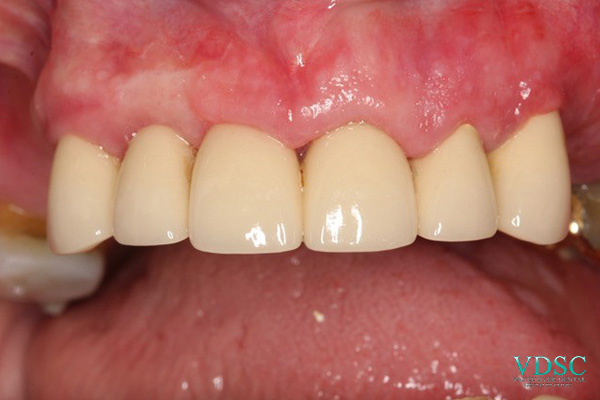
After treatment with dental bridge
What Is A Dental Bridge?
Dental bridges provide a permanent artificial tooth. To replace a missing tooth with a dental bridge, at least one tooth on either side of the space created by the missing tooth must be prepared for a dental crown. At that point, a false tooth is joined to each dental crown, and the entire structure is cemented to the prepared teeth. The patient cannot remove the dental bridge, so special aids are provided to keep it clean.
Dental bridges restore the natural appearance of the smile in a minimally invasive and more affordable way.
Dental Bridge Procedure
The process of getting a dental bridge usually takes a few weeks. We can typically have the permanent bridge installed over the course of 2-3 appointments.
Consultation and Planning
Our prosthodontist begins with an exam and digital imaging to assess the health of your teeth and gums. This helps determine the best dental bridge design and materials for your case. Impressions or digital scans are then taken to ensure an exact fit.
Temporary Bridge
The teeth on either side of the missing space are shaped to support the dental bridge. We then place a temporary bridge to protect the prepared teeth and maintain your bite until the final restoration is ready.
Final Placement
Once your custom bridge is made, we will test the dental bridge and adjust it if needed to make sure it fits comfortably. The final bridge is then permanently bonded into place, restoring both function and appearance. You will leave with a stable, natural-looking restoration that blends seamlessly with your surrounding teeth.
Dental Bridges vs. Dental Implants
Both dental bridges and dental implants replace missing teeth, but they differ in approach and long-term benefits.
Dental Bridges
A dental bridge uses the surrounding teeth for support. It can restore one or more missing teeth and is typically completed within a few weeks. Dental bridges do not require surgery. Due to the use of abutment teeth, dental bridges are a good choice when adjacent natural teeth already need dental crowns or restorations.
Dental Implants
An implant is another option to replace missing teeth. Simply put, an implant is an artificial tooth that uses a titanium post that supports a dental crown. It helps preserve bone structure and does not rely on neighboring teeth for support. Implant treatment takes longer because it involves a healing phase, but it provides a more permanent solution.
Your prosthodontist will evaluate your oral health, bone density, and treatment goals to determine which option is best for you.
Is a Dental Bridge or Dental Implant Right for You?
The right treatment depends on your individual needs. A dental bridge may be recommended if you prefer a quicker, less invasive, non-surgical option.
A dental implant may be the better choice if you want a long-lasting solution that helps preserve jawbone health and doesn't affect neighboring natural teeth.
In dentistry, an abutment is the anchor that keeps the implant in place in your mouth. The downside of a dental bridge is the need for abutment teeth.
When you get a dental bridge, the neighbouring natural teeth serve as the "anchor." The abutment teeth used in a dental bridge are typically shaved and receive dental crowns. If you have healthy teeth around your missing tooth, this may not be ideal. An implant uses a screw as the abutment, so it doesn't affect the existing teeth.
At Vancouver Dental Specialty Clinic, your prosthodontist will assess your oral health, bone structure, and aesthetic goals before recommending a treatment plan. Our goal is to restore your smile with a solution that is comfortable, functional, and long-lasting.
Dental Bridge Maintenance and Care
Proper care helps your dental bridge last for many years. With good oral hygiene and regular dental visits, most dental bridges remain strong and functional for a decade or longer.
Good Oral Hygiene
Brush twice daily with a soft-bristled toothbrush and non-abrasive toothpaste. Floss around the dental bridge and underneath the artificial tooth using a floss threader or interdental brush to remove plaque and food particles.
Dental Checkups
It is essential to visit the dentist regularly, regardless of having a dental bridge. Regular checkups, dental exams, and cleanings allow your dentist to monitor the health of your dental bridge, supporting teeth, and gums. Early detection of wear or decay helps prevent larger issues.
Healthy Habits
Avoid chewing on hard foods or objects that could damage the dental bridge. If you grind your teeth at night, a custom night guard can help protect both natural teeth and restorations.
Long-Term Care
Good home care and professional maintenance are essential to the longevity of your dental bridge. Consistent hygiene and routine visits will help keep your restoration and your overall oral health stable for years to come.
Dental Bridges FAQ
Why Do I Need a Dental Bridge?
Oral functionality and appearance are important reasons for wearing a bridge. A bridge helps support your lips and cheeks and keeps your jawline looking strong. The loss of a back tooth may cause your mouth to sink and your face to look older over time. In addition, missing teeth can result in speech disorders, as they are used to produce many of the sounds we use to speak clearly.
But aesthetics are not as important as oral health, which is the key reason for needing a dental bridge. Teeth were designed to complement each other. If one is missing, adjacent teeth could be negatively affected. Unusual stresses are placed on the gums and other oral tissues when teeth are missing, causing a number of potentially harmful disorders.
For instance, increased risk of gum disease has proven to be one of the worst side effects of missing teeth. This risk can be mitigated with a dental bridge.
What Materials Are Used for a Dental Bridge?
Dental bridges are commonly made from gold alloys, non-precious alloys, high-strength ceramics, or a combination of each.
Are Dental Bridges Covered by Insurance?
What dental insurance plans cover will vary between different insurance providers. Private or employer insurance plans usually offer coverage for Major Restorative procedures, at about 50% up to your annual maximum.
The Canadian Dental Care Plan (CDCP) does not cover fixed bridges (it covers exams, fillings, extractions, some crowns, and removable dentures).
If you are unsure about your insurance coverage, it is best to contact your insurance provider for clarification.
Do I Have to Clean a Dental Bridge the Same Way I Do Natural Teeth?
Oral hygiene is just as critical. A dental bridge relies upon neighboring teeth for support. As dental plaque accumulates under the bridge, special floss (super floss) is needed to clean the area daily.
If you have any questions about dental bridges, including cost, contact Vancouver Dental Specialty Clinic at 604-336-0958.
The results in the photographs are examples only and do not imply any certainty of the result of a procedure, and all outcomes are subject to the circumstances of the individual patient.